Bomba de frecuencia variable - fzmastereagle.com
Fabricante chino de bombas de agua con inversor y sistemas de agua embotellada
Buscar
  • Hogar
  • Bomba de frecuencia variable

  • La función y el principio de funcionamiento del convertidor de frecuencia de la bomba de agua.
    Dec 09, 2025
    Un convertidor de frecuencia para bombas es un componente de transmisión eléctrica que controla motores de CA ajustando la frecuencia y la amplitud de su suministro de energía. En el caso de las bombas de agua, sus funciones principales incluyen optimizar los métodos de arranque de motores de CA trifásicos y lograr una regulación suave de la velocidad. Características de los convertidores de frecuencia de bombas de agua:*Diseñado para control de ahorro de energía de presión constante,*TEstos convertidores integran algoritmos PID y software avanzado de ahorro de energía paraEHabilitar funciones de temporización de presión multipunto con operación de tiempo compartido por carga.*Ahorro de energía del 20% al 60% (dependiendo de las condiciones reales),*FGestión simplificada de características con protección de seguridad y control automatizado,*EProlongar la vida útil del equipo, estabilizar las redes eléctricas, reducir el desgaste y disminuir las tasas de fallas. Principios de funcionamiento:Estos convertidores también pueden regular la velocidad de motores asíncronos monofásicos y recibir corriente bifásica de los condensadores. Normalmente, constan de una unidad rectificadora que convierte CA a CC y suministra energía a circuitos intermedios de CC, junto con un inversor que genera voltaje a frecuencias y amplitudes específicas. Al accionar motores de CA, proporcionan...insomneAceleración de cero a velocidad nominal sin reducción de par. Debido a la fuerte interferencia electromagnética generada en las líneas de alimentación del motor, es esencial un apantallamiento adecuado. Además, la instalación de un filtro sinusoidal entre el convertidor de la bomba y el motor de refuerzo de la tubería convierte la salida PWM del convertidor en una onda sinusoidal. 
    LEER MÁS
  • Why Intelligent Inverter Pumps Are the Future of Water Pressure Management
    Apr 28, 2026
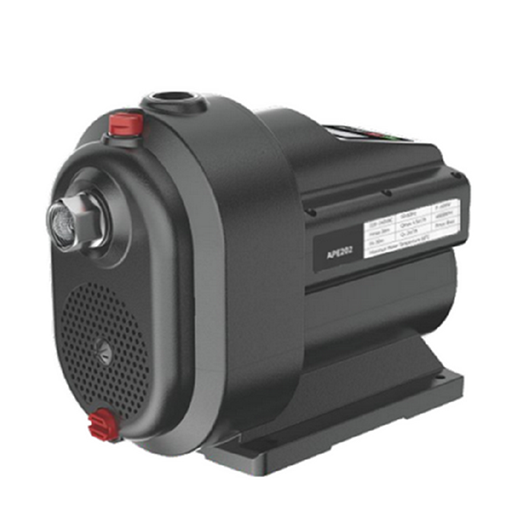
    Have you ever wondered why some buildings never seem to run out of strong water pressure, while others struggle every time a second tap opens? The answer lies in the pump technology behind the walls. For decades, water pressure management relied on constant-speed pumps that had no way to adapt. Today, that is changing — and the intelligent inverter pump is leading the revolution. Unlike conventional pumps that run at a fixed speed regardless of need, an inverter pump uses Variable Frequency Drive (VFD) technology to think on its feet. It senses exactly how much water is being used and adjusts its motor speed instantly. No waste. No pressure drops. No energy burned for nothing. What Makes a Pump "Intelligent"? An intelligent inverter pump is fundamentally different from a traditional pump in one important way: it has a brain. A built-in micro controller constantly reads the water pressure in the pipes. When it detects that pressure has dropped because someone opened a tap, it tells the motor to speed up. When the tap closes and pressure rises, it tells the motor to slow down. This real-time feedback loop means the pump never runs faster than it has to. The result is smooth, silent, and highly efficient operation that traditional pumps simply cannot match. MASTER EAGLE's CHM-DC Series Intelligent Inverter Pump is designed around this principle. It combines a multi-stage centrifugal pump body with a smart VFD controller, delivering precisely the right pressure for every situation. Section 1 — How a Traditional Pump Wastes Energy To appreciate the inverter pump, it helps to understand what it replaces. A standard AC pump works like a light switch — it is either ON at full power or OFF completely. When it turns on, it pushes water at maximum pressure, even if only a small trickle is needed. When no one is using water, the pressure builds to the cut-off point, the pump shuts off, and the cycle repeats. This "start-stop" cycling is inefficient for three reasons: High inrush current every time the motor starts, spiking electricity consumption Pressure surges that stress pipes, joints, and fixtures Mechanical wear from frequent hard starts and stops In contrast, an inverter pump glides smoothly between speeds, eliminating these problems entirely. The APG Series variable frequency booster pump from MASTER EAGLE uses a permanent magnet synchronous motor that is far more efficient than the induction motors found in traditional pumps. Section 2 — Real Places Where Inverter Pumps Make a Difference Intelligent inverter pumps are already transforming water pressure management across different environments. Here is how they perform in three real-world settings: Setting Without Inverter Pump With Inverter Pump 3-story villa, 4 bathrooms Pressure drops when 2 showers run simultaneously; pump cycles on/off loudly all day Steady pressure regardless of usage; pump hums quietly and only works as hard as needed Small hotel with 20 rooms Guests complain about weak showers during peak hours; electricity bill is high All rooms get consistent pressure; energy cost drops noticeably within months Farm irrigation for 2 hectares Manual valves cause water hammer; pump runs at full speed even for drip irrigation Automated pressure control; pump matches the exact flow rate of each irrigation zone These are not hypothetical scenarios. They are exactly the kind of problems that MASTER EAGLE's Self-priming Inverter Water Pump CHM-Z Series solves for customers around the world every day. Section 3 — The Technology Inside: VFD + Permanent Magnet Motor The heart of an intelligent inverter pump is the Variable Frequency Drive. The VFD converts incoming AC power to DC, then synthesizes it back to AC at whatever frequency the motor needs. Changing the frequency changes the motor speed — and therefore the pump's flow rate and pressure. When paired with a permanent magnet synchronous motor (PMSM), the efficiency gains are dramatic: Induction motor (traditional): 70-80% efficiency PMSM (inverter pump): 90-95% efficiency Overall system energy savings: 30-60% The APG Series is a prime example of this technology in action. Its permanent magnet motor generates more torque per amp than conventional motors, meaning it delivers more water with less electricity. Section 4 — Longevity: Why Inverter Pumps Outlast Traditional Ones A pump's lifespan is largely determined by how gently it is treated. Traditional pumps experience violent pressure spikes every time they start, which stresses seals, bearings, and impellers over time. Inverter pumps, by contrast, start softly and ramp up gradually. The CHM-DC Series features built-in soft-start, dry-run protection, and over-temperature safeguards — all of which contribute to a service life that can exceed 10 years with proper maintenance. That is significantly longer than the typical 5-7 year lifespan of a standard pump. Other durability features include: Anti-freeze cycling to protect the pump in cold climates Stainless steel pump body for corrosion resistance Sealed electronics immune to dust and moisture Section 5 — Smart Control: WiFi and Remote Management One of the most exciting developments in modern inverter pumps is WiFi connectivity. MASTER EAGLE's intelligent pump systems allow users to: Monitor real-time pressure and power consumption from a smartphone Set schedules for different pressure levels throughout the day Receive alerts if the pump detects a leak or abnormal operation Adjust settings remotely without needing to visit the installation site This level of control was previously reserved for large commercial building management systems. Today, it is available for homes, farms, and small businesses — at a fraction of the cost. Section 6 — The Cost Question: Is an Inverter Pump Worth the Investment? It is true that an intelligent inverter pump costs more upfront than a standard pump. A high-quality unit like the CHM-DC Series may cost 2-3 times what a basic pressure pump costs. However, the total cost of ownership tells a different story. A typical household using a traditional pump might spend approximately $400-600 per year on electricity for water pumping. An inverter pump can cut that to $200-300. Add in reduced maintenance costs and longer lifespan, and the payback period is typically 12-18 months. After that, every year of operation is pure savings — making the inverter pump the more economical choice over any meaningful time horizon. The Verdict: A Smarter Way to Move Water Intelligent inverter pumps are more than just a technological upgrade. They represent a fundamental shift in how we think about water pressure management — from brute force to precision, from constant waste to adaptive efficiency. MASTER EAGLE offers a full range of inverter pump solutions, from the compact CHM-Z Series for homes to the high-flow CHM-DC Series for commercial applications. Each pump is built to the same rigorous quality standards that have made MASTER EAGLE a trusted name in water systems across the Middle East, Africa, and beyond. Contact us today to find the intelligent inverter pump that fits your water pressure needs.
    LEER MÁS
  • How VFD Technology in Inverter Pumps Saves Up to 60% on Energy Costs
    May 11, 2026
    When it comes to reducing operational expenses in water supply systems, one technology stands out: Variable Frequency Drive (VFD) technology. Combined with intelligent inverter pumps, VFD technology can achieve energy savings of up to 60% compared to traditional constant-speed pumps. But how exactly does this work, and what does it mean for your business? In this article, we break down the science behind VFD energy savings, real-world performance data, and why MASTER EAGLE inverter pumps are engineered to maximize efficiency. What Is VFD Technology? A Variable Frequency Drive (VFD) is an electronic controller that adjusts the frequency and voltage supplied to an electric motor. By varying the motor speed to match actual demand — rather than running at full speed all the time — a VFD eliminates wasted energy. In traditional pumps, the motor runs at a constant speed regardless of water demand. Excess pressure is relieved through mechanical valves, wasting significant amounts of electricity. With VFD technology, the pump precisely matches speed to flow requirements, delivering only the power needed at any given moment. The Affinity Laws: The Science Behind the Savings The energy-saving potential of VFD pumps is rooted in the Affinity Laws of centrifugal pumps: Flow ∝ Speed: Pump flow is proportional to motor speed. Pressure ∝ Speed²: Pressure increases with the square of speed. Power ∝ Speed³: Power consumption is proportional to the cube of speed. This cubic relationship is the key. If you reduce pump speed by just 20%, power consumption drops by nearly 50% (0.8³ = 0.512). A 30% speed reduction cuts power usage by approximately 66%. This is why VFD inverter pumps can achieve energy savings of 60% or more in real-world applications. Traditional Pumps vs. VFD Inverter Pumps: A Cost Comparison Factor Traditional Constant-Speed Pump VFD Inverter Pump Motor Speed Fixed (100% always) Variable (matches demand) Energy Consumption 100% at all times 40–70% of rated (partial load) Pressure Regulation Control valve (inefficient) Variable speed (efficient) Start-up Current High (6–8x rated) Soft start (low inrush) Annual Electricity Cost (Example) $2,800 ~$1,120 (60% savings) Motor Wear & Tear High (mechanical stress) Low (smooth operation) Real-World Energy Savings with MASTER EAGLE Intelligent Pumps Our Intelligent Inverter Pump series incorporates advanced VFD control with a permanent magnet synchronous motor (PMSM), delivering exceptional efficiency across the entire operating range. Unlike induction motors used in conventional pumps, the PMSM rotor maintains synchronism with the stator field, eliminating slip losses and improving part-load efficiency by an additional 5–10%. In field tests: A 3HP Variable Frequency Pump operating in a residential boosting application achieved 62% energy savings compared to the previous constant-speed system. Customer water pressure remained perfectly constant at the set point, with zero complaints about pressure fluctuations. Motor noise was reduced by 40%, and vibration decreased significantly, extending the service life of pipes and fittings. Additional Benefits Beyond Energy Savings VFD technology doesn't just save electricity. It provides a range of operational and maintenance benefits: Soft Start & Stop: Eliminates water hammer and pipe surge, reducing the risk of burst pipes and fitting damage. Constant Pressure: Maintains a consistent water pressure regardless of how many taps are open — no more pressure drops when someone turns on a shower. Extended Equipment Life: Reduced mechanical stress on seals, bearings, and impellers means fewer repairs and replacements. WiFi Remote Monitoring: Our inverter pumps connect to an intelligent APP cloud platform, allowing you to start/stop the pump, adjust pressure, and monitor energy usage from your phone anytime, anywhere. Lower Noise Levels: Operating at reduced speeds produces less noise — ideal for residential and office environments. Conclusion For any facility using pumps for water supply, pressure boosting, or circulation, switching from constant-speed pumps to VFD inverter pumps is one of the most effective energy-saving investments available. The 60% energy savings aren't just a marketing promise — they are backed by the fundamental physics of centrifugal pumps and demonstrated in real installations worldwide. If you are evaluating pump solutions for a new project or considering upgrading an existing system, contact the MASTER EAGLE team for a consultation and energy savings analysis. Let us help you reduce your operating costs while improving water system performance.
    LEER MÁS
dejar un mensaje
dejar un mensaje
Si está interesado en nuestros productos y desea conocer más detalles, deje un mensaje aquí, le responderemos lo antes posible.

Hogar

Productos

whatsApp